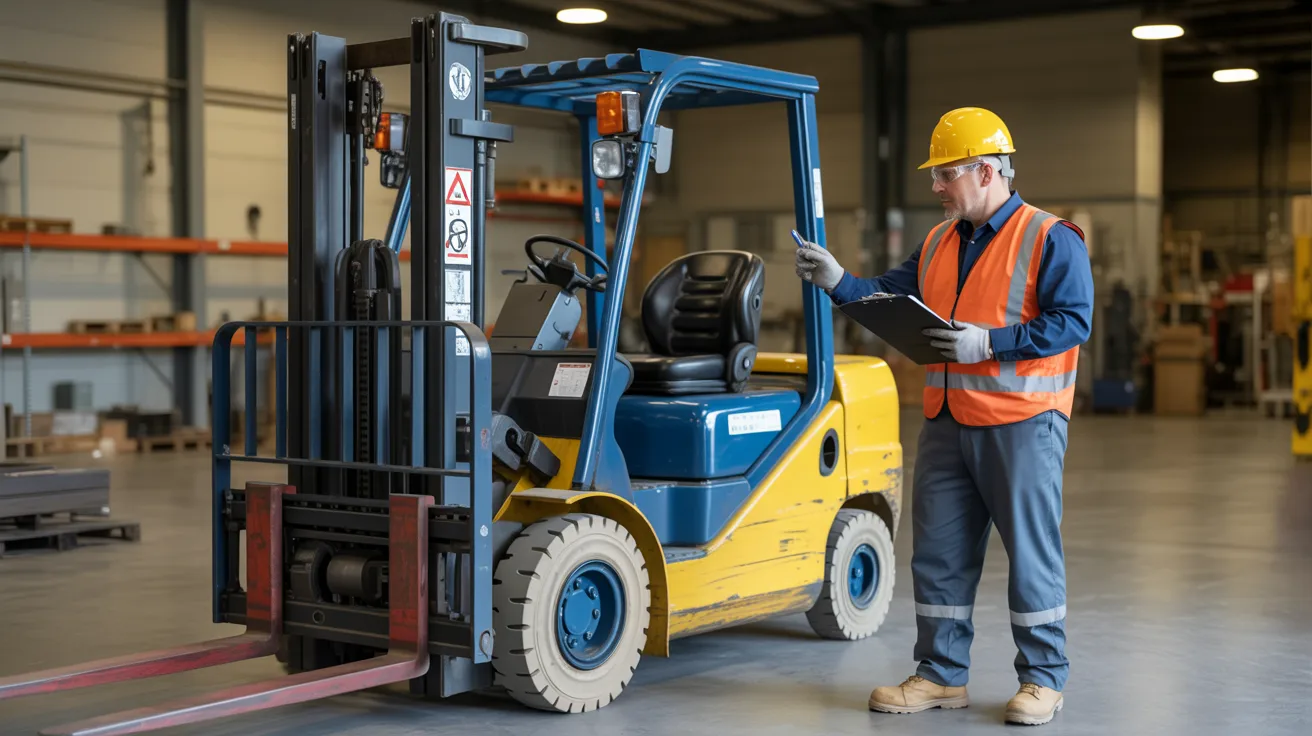
Pre-Operation Inspection. A thorough inspection of the forklift is crucial before starting work. Our course teaches operators how to check key components, such as brakes, steering, lights, and safety features, and identify potential issues.
Load Handling and Stability. Forklift operators often handle heavy and unbalanced loads, making stability crucial. Our course covers load capacity, balancing techniques, and the importance of load placement to prevent tipping.
Worksite Safety. Forklift operation is often carried out in busy, confined environments. This section focuses on worksite safety practices, including communication with co-workers, proper use of safety signals, and understanding the right of way.
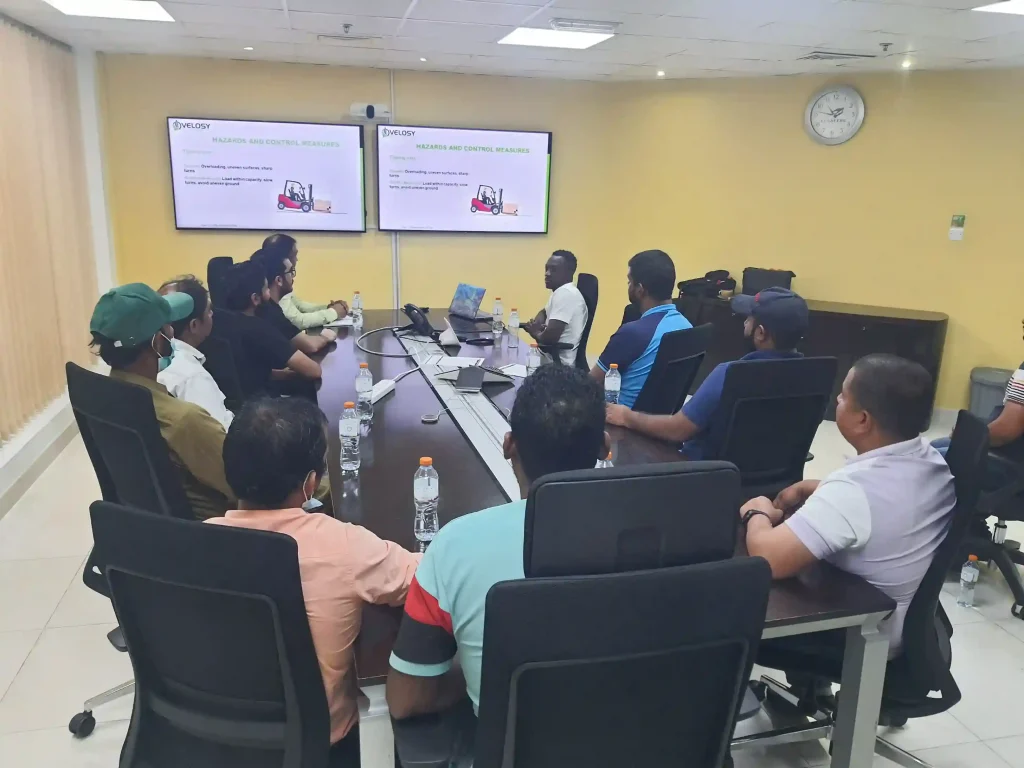
Hazard Identification. Recognizing potential hazards on the worksite, such as uneven surfaces, wet or slippery floors, and nearby equipment, is essential for safe operation. Our course helps operators identify these risks and respond effectively to prevent accidents, ensuring that hazard identification becomes a part of their daily routine.
Compliance with Regulations. Compliance with industry and governmental safety regulations is vital in reducing workplace incidents and meeting legal standards. Our training ensures that operators are knowledgeable about local and international forklift safety regulations.
Parking and Shutdown Procedures. Proper parking and shutdown procedures are crucial for preventing accidents when the forklift is not in use. Our course teaches operators how to safely park on flat surfaces, lower forks to the ground, and set parking brakes.